

Welcoming Spring: Sándor, József, Benedek (Workshop 11) (12 March 2025)
Look at this enthusiastic little team! This is what it looks like when children absorb ethnographic knowledge with shining eyes and open mouths, learning about the traditions of banishing winter and welcoming spring, before crafting their own straw dolls with a skill that puts adults to shame.
In the past, the folk custom of welcoming spring and burying winter involved throwing a straw-stuffed doll dressed in traditional folk costume into the water or burning it. The doll symbolised illness and darkness, which were symbolically banished to welcome the arrival of spring.
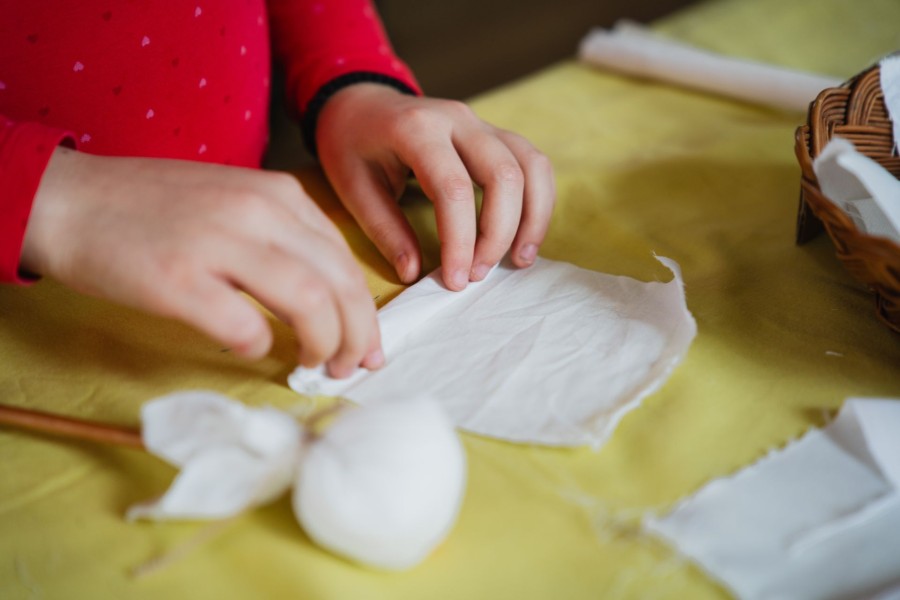
During the spring-welcoming handhandcrafts session, the children created miniature replicas of this traditional doll (kiszebáb). They tied the textile-made head onto a twig base, then attached the skirt or trousers and the arms to the twig. The doll's outfit was decorated with ribbons featuring traditional folk motifs, and their hair was crafted from yarn.
Afterwards, they re-enacted how the procession with the straw doll used to take place; they symbolically threw a large-sized doll into the waters of the River Maros, thereby banishing darkness and illness. According to tradition, this also marked the beginning of the pre-Easter fast (Lent), which lasts from Ash Wednesday to Holy Saturday.
And staying true to tradition, the hardworking team was also treated to a traditional food tasting: as a fasting dish, the sweet semolina cake (grízmálé) disappeared in a matter of minutes.